David Boies
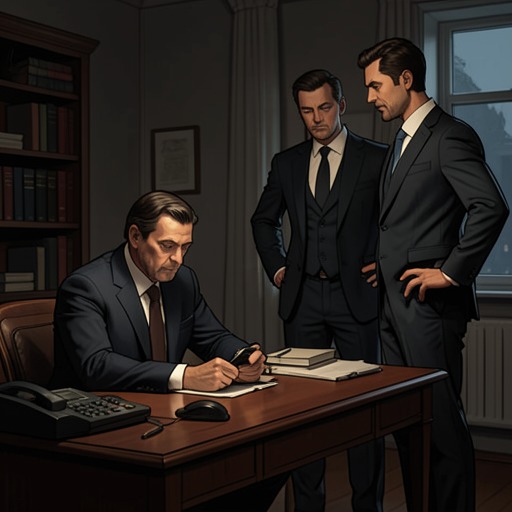
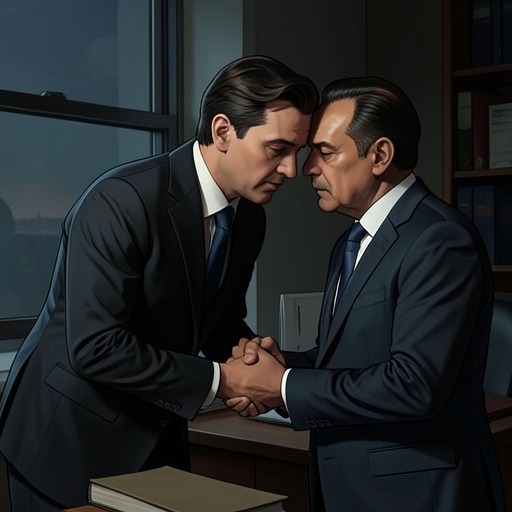
She SaidDavid Boies appears in the account as a powerful lawyer positioned at several points where information about Harvey Weinstein might have become public or prompted action. He advised Weinstein and The Weinstein Company, helped impose secrecy on people investigating Weinstein, and was involved in efforts directed against The New York Times’ reporting. At the same time, he presented himself as helping gather facts for a defense. The central tension is not simply whether he represented one client or another, but how legal work and divided institutional roles could help contain scrutiny rather than resolve the conduct under scrutiny.
Legal Work and the Flow of Information
In an investigation of an undisclosed transfer of $600,000 raised at an amfAR auction to investors in the Weinstein Broadway production Finding Neverland, lawyer Tom Ajamie told Megan Twohey that Boies had muzzled members of the charity’s board with nondisclosure agreements. Ajamie, hired by the board to examine the transaction, said Harvey Weinstein had blocked his review at every turn. The agreements restricted what board members could tell him, limiting the information available to an inquiry into how charitable funds had been used.
The restriction extended to Ajamie himself. After he raised concerns about allegations of harassment and abuse with Lisa Bloom, she later brought him to meet Weinstein. Weinstein first objected to Ajamie’s investigation, then proposed working out a deal; the condition was that Ajamie sign an NDA drawn up by Boies and keep what he had learned about Weinstein secret. In this episode, legal drafting was not incidental paperwork: it was the proposed price of continued access and a means of placing the investigator’s knowledge under contractual restraint.
Inside The Weinstein Company
Boies also stood between Weinstein and the company’s own oversight. In 2015, independent board member Lance Maerov sought access to Weinstein’s personnel file while the brothers’ executive contracts were being renewed. Weinstein refused to let him inspect it. Boies offered instead to review the file himself and report to the board on any potential legal problems for the company. Maerov found the proposal troubling: Boies sometimes seemed to be acting for the company and sometimes for Weinstein, creating uncertainty about whose interests would govern the handling of damaging information.
A private glimpse of the file gave Maerov a memo concerning employee Emily Nestor, but it did not produce sustained scrutiny. During contract negotiations, Weinstein accepted a new code of conduct, escalating financial penalties for settlements arising from his misconduct, and the possibility of termination. Those contractual terms were intended to protect the company against future costs; the account does not attribute their drafting to Boies. It does show his role in a separate decision with lasting consequences. Bob Weinstein wanted his brother’s treatment for sexual behavior made a written, enforceable condition. Boies persuaded him not to put that requirement into the agreement, arguing that Maerov could use the information to gain greater control over the company. Bob accepted a private promise instead, one that could not be enforced in the way a contract could.
That choice illustrates the difference between a measure designed to constrain conduct and one that leaves compliance dependent on personal assurances. The company had put financial consequences on paper, but the treatment commitment Bob most wanted to secure was left outside the formal contract. Boies’s advice therefore helped shape not only what the board might learn, but which proposed safeguard would have force if Weinstein failed to follow through.
The Investigation and the Countereffort
As The New York Times investigated Weinstein, Boies’s work became part of a campaign to monitor and counter the reporting. He worked with Weinstein and Bloom, and Bloom collaborated with a Black Cube agent to gather information on women who might accuse Weinstein, including Rose McGowan, Ambra Battilana Gutierrez, and Ashley Judd. The investigators also compiled dossiers on journalists’ social-media activity in an effort to identify their sources. The reporting later disclosed that Boies’s firm had helped execute a contract for Black Cube to undermine The New York Times’ investigation.
Boies defended the arrangement by saying that he believed the best way for Weinstein to contest critical stories was to provide facts supporting his defense, and that he thought Black Cube would gather such facts. He said he had not known about the firm’s underhanded tactics and regretted not paying closer attention. The explanation distinguishes the information-gathering he said he expected from the tactics later uncovered, but it does not remove the institutional contradiction: Boies’s firm was helping target the newspaper while also representing it in legal matters. Boies maintained that this was not a conflict of interest. The New York Times called the firm’s actions reprehensible and fired it.
The reporters did not initially know the extent of the connection. In the summer of 2017, Jodi Kantor received friendly messages from an intermediary she did not recognize as an actor-agent hired to sabotage the investigation and undercut sources’ accounts. At Dean Baquet’s direction, Kantor and Twohey had declined requests to meet with the attorney. Boies seemed to them a distant figure rather than someone connected to the messages. The later disclosures altered the significance of those contacts: the effort to gather information was also an effort to map the reporting and weaken the accounts on which it depended.
The Board Call Before Publication
On the night before the newspaper’s new publication deadline, Weinstein joined an emergency call with Boies and the company’s board. Maerov had pressed for the meeting because Weinstein had hired lawyers, including Lanny Davis’s firm, to respond to a coming story without informing the board. Boies did most of the talking. He told the board the article was imminent and would be damaging, summarized its findings, and described eight to twelve settlements, while warning that the actual number might be higher. He also said Weinstein might not remember how many payments had been made over the years.
Boies argued against both defending Weinstein outright and terminating him, presenting those as extreme responses and urging the group to hold together around a middle course. His account placed the coming disclosures before the board, but the response he advocated was collective positioning rather than a decisive break with Weinstein. The call thus brought into view two functions of his role: he conveyed information that the board needed to understand the scale of the impending story, and he advised how the company and Weinstein might manage the exposure.
Narrative Role and Significance
Across these episodes, Boies is associated with restrictions on information, conflicted representation, and the management of institutional liability. NDAs limited what members of the amfAR board and its investigator could say; an offer to review Weinstein’s personnel file placed a lawyer between the board and records about its executive; advice to Bob Weinstein left a treatment commitment unenforceable; and work connected to Black Cube put Boies’s firm on both sides of a consequential relationship with The New York Times.
The account does not reduce these actions to a single motive, and it records Boies’s explanations as well as the consequences of his work. Its portrait instead turns on repeated structural questions: who could see the information, who was permitted to disclose it, and which institution’s interests a lawyer was serving at a given moment. By the time the board discussed the imminent article, the legal and corporate machinery that had helped contain scrutiny was confronting a report it could no longer prevent. Boies’s role makes visible how professional authority could operate not only as a response to allegations, but as part of the system that controlled their circulation and the company’s reaction to them.